of calls to small and mid-sized firms go unanswered during business hours.
Law Leaders 2025Case study / Revenue infrastructure / Founder
Verdigence
Brand, funnel, and product built as one system.
Revenue infrastructure for personal injury firms. Built on Vercel, Supabase, and Make instead of rented wrappers: intake response in under sixty seconds, around the clock, with the pipeline instrumented end to end so the leak point is a number, not a guess.
Trust before technology
A technical service for people who do not want another technical system.
Verdigence is a done-for-you revenue infrastructure service built for personal injury law firms. CaseFlow OS powers the pipeline as a managed operating system rather than a software license or marketing retainer.
The design problem was making automated intake, AI lead reactivation, and pipeline visibility feel clear and trustworthy while keeping the underlying system fully managed.
Industry data, not Verdigence results
The response gap is documented across legal intake.
of firms never respond to online lead forms.
Hennessey Digital 2025of leads are never followed up with.
Filevinehigher conversion rates were reported for prospects contacted within one minute.
Velocifymore likely to qualify the lead when contacted within five minutes rather than thirty.
Lead Response ManagementOne connected system
Trust designed across brand, funnel, and product.
Verdigence was designed from zero as one coherent system: identity, marketing site, and the CaseFlow OS product. The product logic stays fully controlled and white-labeled per firm, with every pipeline step instrumented end to end.
Brand
Position the category
Revenue infrastructure for personal injury firms, not another generic platform wrapper.
Funnel
Make the service legible
Connect the positioning to a managed system for the revenue pipeline rather than a software license.
Product
Expose what matters
Automated intake, AI lead reactivation, and pipeline visibility, instrumented so failure points can be located.
Pre-launch positioning validation
Before selling, I simulated 500 personal injury attorney personas to stress-test the positioning. This was a method for finding weaknesses in the proposition, not evidence of a client outcome.
From identity to intake logic
Brand, funnel, and CaseFlow OS.
I founded Verdigence and designed its identity, marketing site, and product from zero. The architecture uses Vercel, Supabase, and Make instead of rented platform wrappers so the intake logic can be controlled, white-labeled per firm, and instrumented end to end.
The brand
Identity and positioning
A focused identity and a category position centered on revenue infrastructure for personal injury firms.
The funnel
A connected path
A marketing site designed as part of the same system as the managed service and product.
The product
CaseFlow OS
A managed operating system for automated intake, AI lead reactivation, and pipeline visibility.
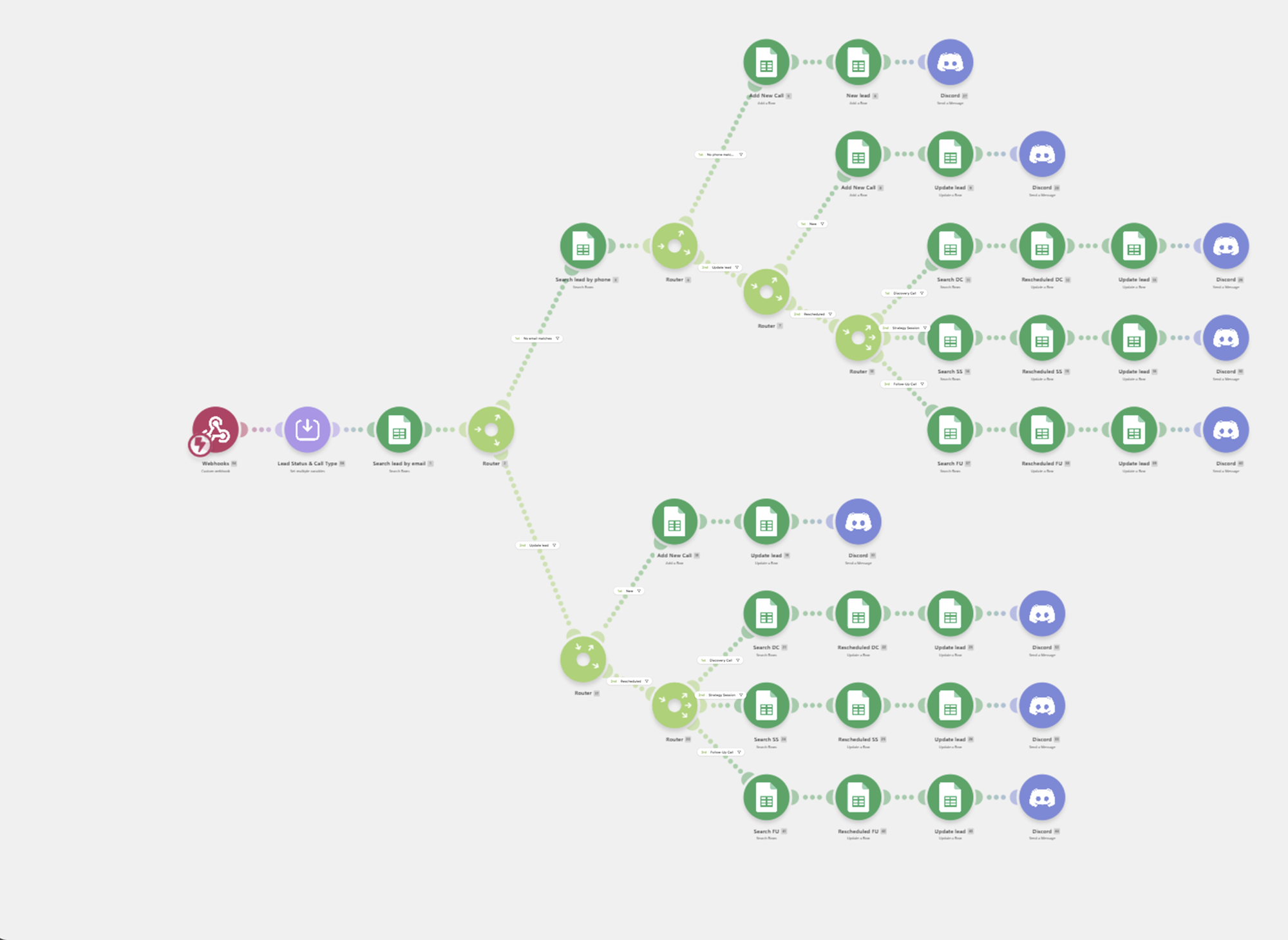
Observed over roughly one month
Lead volume was not the constraint.
I ran Verdigence inside three personal injury firms. The pipeline broke after the lead already existed, and the firms experienced the separate failures as one vague feeling that marketing was not working.
After-hours calls
Calls landed after hours with nobody answering.
Qualification time
Attorney time burned on leads that were never going to qualify.
Retainer follow-up
Retainer-ready leads went cold after a retainer was sent and no one followed up.
After the first three firms, I paused new client acquisition and rebuilt the intake layer around what I had watched break.
The operating lesson
Instrument the pipeline before selling on top of it.
Every firm buys marketing assuming the problem is not enough leads. What I watched was different: the pipeline was breaking further down, after the lead already existed.
The lesson was to instrument the pipeline end to end so the leak point becomes a measurable number rather than an inference, and to stop selling on top of a layer I had already watched break.